Public Brief · 2026
Energy Infrastructure
BIOLOOP
A briefing on the structural failure of global diesel supply — and the engineering gap no one has closed.
Status Pre-Disclosure
Stage Venture Brief
Year 2025
Open research brief · Summary only
01 · The Fuel Problem
02 · Why Alternatives Fail
03 · The Only Viable Path
04 · Feedstock Selection
05 · Why It Hasn't Worked
06 · The Pressure Builds
07 · Bioloop
01
The Fuel
Problem
Diesel is not just a fuel. It is the structural backbone of modern economies — and it is broken at the root.

Modern economies run on diesel. Not as one option among many — but as the singular, non-negotiable fuel for freight transport, agriculture, and industrial movement. The global logistics system, food supply chain, and manufacturing backbone all depend on it functioning without interruption.

Diesel is produced through fractional distillation of crude oil — a fixed industrial process with a fixed output ceiling. It constitutes roughly 25–30% of each barrel refined. You cannot produce more diesel without processing more crude. There is no workaround. There is no independent production pathway.

~80%
Global energy still supplied by fossil fuels
88–89%
India's crude oil that is imported
$140B+
India's annual crude oil import bill

This creates a chain of structural vulnerabilities. Global oil supply depends on Middle East production, maritime chokepoints — the Strait of Hormuz, the Suez Canal — and political stability across regions that have demonstrated repeated instability. The Russia–Ukraine conflict realigned supply chains overnight. Iran–Israel tensions triggered tanker risk and price spikes of 20–25%. A single container vessel blocking the Suez Canal cascaded delays across global trade.

India imports approximately 55% of its crude from the Middle East. Japan imports 95%. South Korea, 70%. Strategic reserves in India cover roughly 20–25 days of consumption. There is no meaningful buffer.

Karnataka holds no crude oil reserves. Belagavi — with its dense agricultural, industrial, and logistics activity — operates entirely at the mercy of a supply chain it has zero influence over. Every fuel price movement is a direct shock to farming costs, transport economics, and local livelihoods.

This is not a future risk. It is the current operating condition. And domestic production in India is on a declining trajectory while demand accelerates.

The system is structurally fragile. And demand is only growing.
02
Why Existing
Alternatives Fail
Every proposed solution to diesel dependence breaks against the same wall: the real world.
Alternative Heavy Transport Existing Infrastructure Local Production Deployment Readiness
Electric Vehicles Not viable Requires overhaul Grid dependent Decades away
Hydrogen Theoretical None exists Cost prohibitive Not deployable
CNG / LNG Limited New systems needed Still fossil fuel Partial
Ethanol Wrong engine type Petrol only Food crop conflict Not a substitute

Electric vehicles are advancing rapidly in passenger transport. They are not a solution for long-haul trucking, agricultural machinery, or industrial equipment. Battery energy density remains insufficient. Charging infrastructure in India's freight corridors does not exist at scale. And India's electricity grid still relies heavily on coal — replacing diesel with EVs without solving the grid problem simply relocates the dependency.

Hydrogen carries theoretical promise but practical impossibility at current scale. Storage requires either extreme pressure or cryogenic temperatures. Neither is compatible with existing transport infrastructure. Production costs remain far above diesel economics. India has no hydrogen distribution network.

CNG and LNG reduce emissions incrementally but do not address the structural problem — they are still fossil fuels, still externally sourced, still requiring new engine architectures and distribution systems that India's fleet cannot absorb quickly.

Ethanol operates in a completely different engine category. It blends with petrol, not diesel. It competes with food crops for feedstock. It is not a diesel substitute in any operational sense.

Vehicle fleet turnover in India takes decades. Infrastructure shifts take longer. Any solution that requires either is not a solution for the current crisis — it is a distant aspiration that leaves the present system exposed.

No current alternative is deployment-ready for diesel replacement in core sectors.
03
The Only
Viable Path
One fuel class satisfies every constraint. Not perfectly — but decisively.

Biodiesel is a direct diesel substitute produced from biological lipids — oils and fats — through a chemical process called transesterification. Triglycerides react with methanol in the presence of a catalyst to produce Fatty Acid Methyl Esters (FAME) — biodiesel — and glycerol as a byproduct.

The critical property is compatibility. Biodiesel operates in compression ignition engines — the same engines that run on diesel — at blends from B20 (20% biodiesel) to B100 (pure biodiesel) without engine modification. It flows through existing fuel distribution infrastructure. It can be produced without crude oil. It can be produced locally.

~37–40
MJ/kg energy density (vs diesel's ~45 MJ/kg)
Better
Lubricity vs conventional diesel
Lower
CO and particulate matter emissions

The energy density gap — approximately 10–15% lower than petroleum diesel — is real. It is also manageable. Biodiesel's superior lubricity reduces engine wear. Its cleaner combustion profile compensates for the density difference in real-world performance. The trade-off is acceptable. The compatibility advantage is decisive.

No other alternative can be dropped into an existing diesel engine, in an existing vehicle fleet, using existing fuelling infrastructure, produced without crude oil. Biodiesel can.

The infrastructure lock-in that makes alternatives impossible is precisely what makes biodiesel viable. It doesn't fight the existing system. It feeds into it.

Biodiesel works. The feedstock is the problem.
04
Feedstock
Selection
Every feedstock option has been evaluated. One survives every test.

A viable biodiesel feedstock must satisfy five conditions simultaneously: high oil yield per unit area, no competition with food supply, scalable production, stable cost, and local availability. Failing any one condition eliminates a feedstock from serious consideration.

Feedstock Oil Yield Food Conflict Scalable Verdict
Edible oils (soy, palm) 500–1,000 L/ha/yr Severe Deforestation risk Eliminated
Jatropha / Pongamia ~600 L/ha/yr None Failed at scale Eliminated
Waste Cooking Oil Supply-limited None Not backbone Supplementary
Animal Fats High lipid % Ethical concerns Supply constrained Eliminated
Microalgae 20,000–50,000 L/ha/yr None Non-arable land Selected

Jatropha deserves specific mention. India ran a national-scale Jatropha programme and it failed. Yield was inconsistent. The growth cycle was too long. Land requirements were impractical. It is not a theoretical elimination — it is an evidence-based one.

Microalgae produces up to 50,000 litres of oil per hectare per year. The nearest crop-based competitor produces roughly 1,000. That is not an incremental difference. It is a categorical one.

Soybean
~450 L/ha/yr
Sunflower
~800 L/ha/yr
Palm Oil
~5,000 L/ha/yr
Microalgae
Up to 50,000 L/ha/yr

Microalgae grows in non-arable land, in controlled reactor environments, with doubling times measured in hours. It requires no agricultural land. It does not displace food crops. It can use CO₂ as a direct input. Its lipid content — at 20–50% of dry biomass under optimized conditions — is unmatched by any plant-based source.

Microalgae is not selected because it is convenient. It is selected because every other option fails at scale, and microalgae is the only feedstock whose theoretical yield can match diesel demand density — without competing for land, water, or food.

Microalgae is the only scalable answer. But no one has made it work. That is the real problem.
05
Why It
Hasn't Worked
The failure of microalgae biodiesel is not biological. It is engineering. And it is systemic.

Microalgae biodiesel has been studied for decades. The potential has been known since the 1970s. Multiple countries, institutions, and companies have attempted scale-up. None have achieved commercial viability. The reason is consistent across every attempt: the system is not optimized as a unified whole.

≤ 1
Energy Return on Investment (EROI) — observed in current systems
Many microalgae biodiesel systems consume as much energy to operate as the fuel they produce. When EROI falls to or below 1, the system is energetically unsustainable regardless of all other metrics.

This is not a marginal inefficiency problem. It is a fundamental systems architecture problem. The biological potential exists. The chemistry is established. The engineering integration required to make it viable has not been achieved.

The failure is engineering, not biology. The gap is system integration, not scientific understanding.
06
The Pressure
Builds
Four forces are moving simultaneously. None of them are reversing.
Diesel Demand
Increasing ↑
Driven by freight expansion, agricultural mechanisation, and industrial growth across emerging economies. India's logistics sector is accelerating, not slowing.
Crude Supply
Externally Constrained
88–89% imported. Routed through geopolitically unstable corridors. Domestic production on a declining curve. No independent scaling pathway exists.
Alternative Readiness
Not Deployment-Ready
No alternative fuel matches diesel's compatibility, energy density, and infrastructure fit for heavy transport. The gap remains open.
Infrastructure Lock-in
Decades to Change
Fleet turnover, distribution infrastructure, and engine architecture are locked into diesel for the foreseeable future. Abrupt transition is not operationally possible.

These four forces do not operate independently. They compound. Rising demand against a constrained and unstable supply, with no ready alternative and no quick escape from infrastructure dependence, produces a system under increasing stress.

At the national level: rising import bills, price volatility, strategic exposure. At the local level in Belagavi: higher agricultural input costs, increased logistics expense, vulnerability to any disruption in the supply chain between the Middle East and a local fuel depot.

There is no natural equilibrium here. The trajectory does not bend toward stability on its own.

The current trajectory does not lead to stability. It leads to increasing dependence on a fuel system that is externally controlled, supply-constrained, and operationally critical — with no buffer and no exit visible on the near-term horizon.

In this context, the challenge is not identifying alternatives — it is enabling a fuel pathway that operates within existing systems while reducing dependence on external crude supply.
07
BIOLOOP
Closing the loop on diesel dependence.

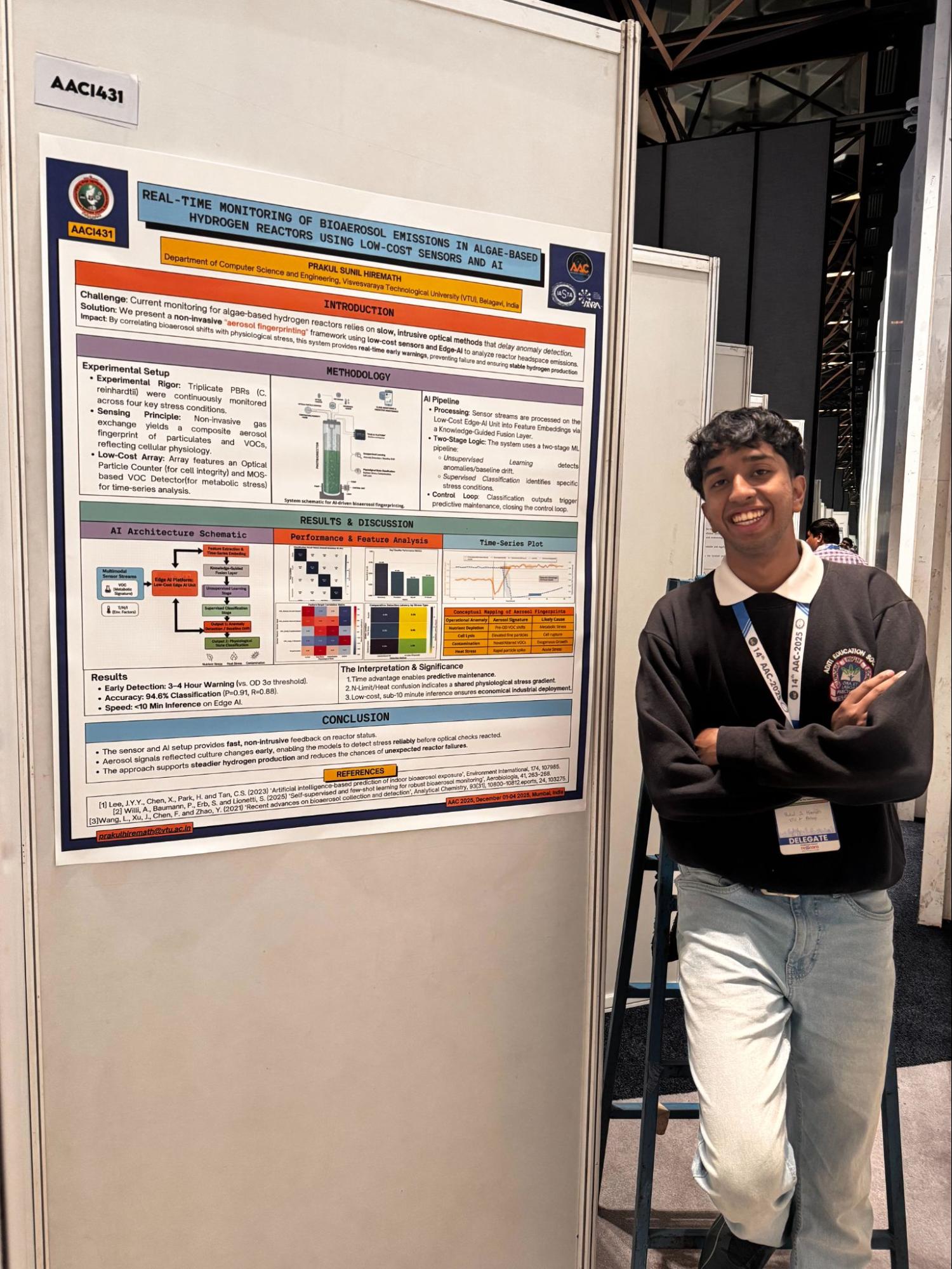
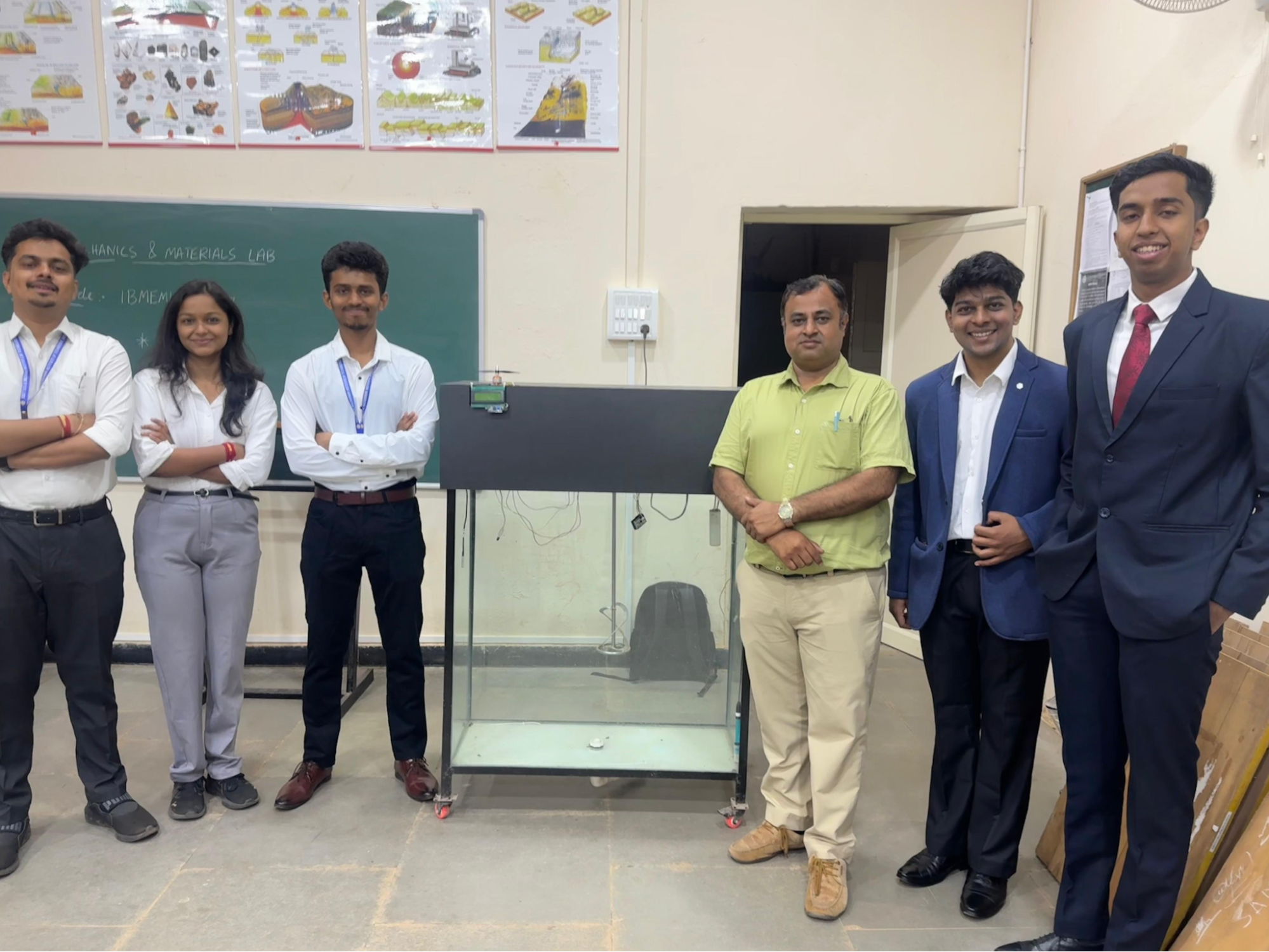
Bioloop is being built to address the exact engineering gap identified in this document — not as another algae research project, but as a system-level solution to microalgae biodiesel's fundamental integration failure.

The problem is not biological. The solution is not simply growing algae. The opportunity is in designing a unified production system where cultivation efficiency, biomass yield, harvesting energy cost, and lipid extraction are optimised together — not in isolation.

Bioloop targets local, modular, and scalable biodiesel production — deployable without crude oil dependency, compatible with existing diesel infrastructure, and engineered to achieve a positive energy balance where current systems cannot.

The system is in active development. Technical architecture, production economics, and deployment roadmap are available for discussion under engagement.

This document is a pre-disclosure briefing. It establishes context, identifies the problem, and positions the opportunity. No proprietary technical details, process specifications, or system architecture are included here.

Further information — including Bioloop's technical approach, production design, and engagement terms — is available exclusively to parties who express formal interest.

To initiate a discussion: reach out directly. We will respond to serious enquiries.

Write us — bioloopofficial@gmail.com
We are located at — Karnataka, India